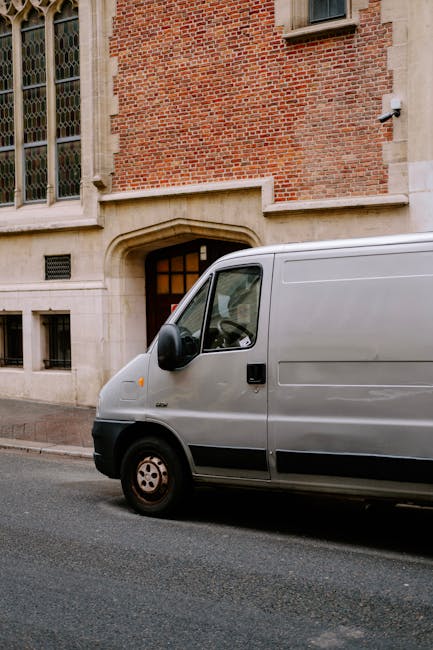
Council permit rules for Plumstead van parking and removals
If you are planning a move in Plumstead, the parking side of the job can be the part that catches people out. A van can be perfectly ready, the boxes can be packed, and the sofa can be wrapped, but if the council permit rules for Plumstead van parking and removals are not checked early, the whole day can become stressful very quickly. Nobody wants a moving crew circling the block looking for a legal space while neighbours are trying to get out for work.
This guide breaks the topic down in plain English. It explains why permits matter, how loading and parking arrangements usually work, what can go wrong, and how to plan removals in a way that feels calm rather than chaotic. You will also find practical checklists, comparisons, and real-world tips that help whether you are moving a studio flat, a family house, or an office. If you want the move itself handled with care, it can also help to understand how a reliable man and van service fits into the picture alongside permits and parking restrictions.
Key takeaway: parking permission is not a small admin detail. For a removal day, it can decide whether the move runs smoothly, gets delayed, or ends up expensive.
Table of Contents
- Why Council permit rules for Plumstead van parking and removals Matters
- How Council permit rules for Plumstead van parking and removals Works
- Key Benefits and Practical Advantages
- Who This Is For and When It Makes Sense
- Step-by-Step Guidance
- Expert Tips for Better Results
- Common Mistakes to Avoid
- Tools, Resources and Recommendations
- Law, Compliance, Standards, or Best Practice
- Options, Methods, or Comparison Table
- Case Study or Real-World Example
- Practical Checklist
- Conclusion
- Frequently Asked Questions
Why Council permit rules for Plumstead van parking and removals Matters
Parking rules affect removals in a very direct way. A moving van needs safe access, enough space to load and unload, and enough time to do the job without blocking traffic or creating a hazard. In residential streets, especially around busy parts of south-east London, that is not always easy. Road width, bay restrictions, yellow lines, suspended bays, resident-only spaces, and timed access controls can all get in the way.
For Plumstead moves, the practical risk is simple: if the vehicle stops in the wrong place, it may receive a penalty, cause complaints, or force the team to work from a poor position. That can add time to the move and a lot of unnecessary friction. To be fair, even a short delay can knock the rest of the schedule off balance. One awkward parking decision at 8:30 in the morning can turn into a long day.
The reason this matters even more for removals is that you are often dealing with bulky items, fragile goods, and time-sensitive access. A fridge cannot be carried half a street while you wait for a space to open. A piano or wardrobe is even less forgiving. If you are using removal van transport, the whole setup works best when the parking plan is sorted before the vehicle arrives.
There is also a neighbour-relations angle. A van blocking driveways or sitting on the pavement can create tension, even when no one means any harm. And let's face it, the average moving day already has enough moving parts without adding a quiet row with the house next door.
How Council permit rules for Plumstead van parking and removals Works
There is no single universal rule for every road in Plumstead. That is the first thing to understand. Parking arrangements usually depend on the location, the type of bay or restriction in place, the size of the vehicle, and how long the van needs to stay. Some streets allow loading for a limited period. Others may need a permit, an exemption, or a booked suspension where a bay has to be reserved.
In practice, removals normally fall into one of a few common situations:
- Short loading in a legal bay: suitable when the van can stop briefly and local rules permit loading activity.
- Waiting in a restricted bay: sometimes possible if the vehicle qualifies under local loading allowances, but this depends on the exact signage and timings.
- Resident or visitor bays: may be available only with a permit or within specific rules.
- Roadspace or bay suspension: used when access needs to be reserved for a larger move or a difficult frontage.
- Private land or driveway access: often the easiest option, if available.
The moving company or van operator should always check the exact address and access conditions before the day. In a narrow street, the difference between parking 10 metres away and parking directly outside the property can decide whether the job is straightforward or miserable. You notice it most when the heavy items come out. The first chair is fine. By the time the third box of books appears, distance starts to feel very real.
If you are coordinating a larger home move, pairing proper access planning with a broader service such as home moves or house removals can make the permit side less stressful because the job is scheduled as one organised process rather than a series of guesses.
Key Benefits and Practical Advantages
Getting the parking rules right is not only about avoiding fines. It changes the whole feel of the move. When the van is legally and sensibly positioned, the team can work more efficiently, the property is easier to protect, and the day feels less rushed. Small thing, big difference.
- Less risk of penalties: no one wants an avoidable ticket on moving day.
- Faster loading and unloading: shorter carrying distances mean less fatigue and fewer trips.
- Safer lifting: items move from door to van with less chance of bumps, slips, or strained backs.
- Better neighbour relations: a planned stop is less disruptive than a random blockage.
- Reduced delay risk: fewer parking surprises means the schedule stays intact.
- Cleaner handover: especially helpful for rentals, flats, and office spaces with timing rules.
There is another benefit that people miss: stress reduction. Once the parking question is solved, the rest of the day becomes easier to manage. That calm matters. It helps the person moving, the removals team, and anyone else who has to coordinate keys, lifts, access codes, or building managers. If you have ever watched a move stall because nobody could park nearby, you already know how quickly the mood can change.
Who This Is For and When It Makes Sense
Permit and parking planning is relevant for more people than you might think. It is not only for huge family house moves or office relocations. Even a small van can face restrictions if the street is busy or the property sits on a tight terrace road.
This matters most if you are:
- moving from a flat with limited street access
- living on a road with controlled parking zones
- using a van on a main road or near junction restrictions
- moving large or fragile items that need a close parking position
- coordinating a timed move with a landlord, estate agent, or building manager
- planning a same-day turnaround with little room for delays
It also makes sense for students, sharers, and people downsizing. A smaller load does not automatically mean easy parking. Sometimes it is the opposite, because the move is quick on paper but awkward in the street. For that kind of job, services like student removals or same-day removals may still need a parking plan if the route outside the property is tight.
If you are moving a business, the issue is even more important. Customer access, loading bays, and staff entrances can all be affected. A professional commercial moves approach usually considers the parking setup as part of the job, not as a last-minute extra.
Step-by-Step Guidance
Here is a practical way to handle the parking side of removals without turning it into a full-time project. Keep it simple and start early.
- Check the exact address and street layout. Not just the postcode. Look at the frontage, nearby restrictions, and whether a van can stop close to the entrance.
- Read any on-street signs carefully. Loading rules, time limits, permit bays, and suspension notices all matter. The smallest detail can change what is allowed.
- Estimate the vehicle size you need. A larger vehicle may carry more but can be harder to position legally. A smaller van may fit better but require more trips.
- Plan access at both ends of the move. The old property and the new one can each have different parking rules. People often check one end and forget the other. It happens.
- Confirm whether a permit, suspension, or exemption is needed. If the road is controlled, check this early rather than the day before.
- Build in buffer time. Parking changes the move duration. A "quick job" can become a longer one if the van is not close by.
- Coordinate with everyone involved. Make sure the removals team, the building manager, and the person with the keys all know the plan.
- Have a backup. Sometimes the intended space is occupied. Decide in advance where the driver can legally wait and what the next option is.
If you are also sorting boxes, wrapping, and room-by-room packing, it helps to align the move plan with packing and boxes support so the schedule is easier to control. That might sound obvious, but in real life people pack the kettle last and then wonder why the kitchen feels impossible. Human nature, really.
Expert Tips for Better Results
After many removal days, a few habits make the biggest difference. Nothing fancy. Just sensible preparation.
- Photograph the parking signs and road layout. A quick photo is useful if you need to double-check restrictions later.
- Use the closest lawful position, not just the closest possible one. Saving ten seconds is not worth creating a problem.
- Keep the loading route clear. Doorways, front steps, and shared paths matter just as much as the van space itself.
- Tell the team about awkward items early. A piano, large wardrobe, or heavy dining table changes how much space and time you need. For those jobs, a specialist like piano removals or a broader furniture removals service can help shape the parking and handling plan.
- Think about the weather. Rain and wet pavements slow everything down. A short carry becomes a slippery one, and the route to the van matters more.
- Ask about building rules too. Some blocks care just as much about lifts, booking slots, and protective coverings as the council does about the street outside.
A useful habit is to treat parking as part of the removal project, not a separate admin task. That mindset keeps things tidy. It also avoids the odd, awkward moment where the crew arrives and everyone discovers the only safe space is three streets away.
Common Mistakes to Avoid
Most parking problems on removals day come from a few familiar mistakes. They are easy to make, which is why they are worth spelling out.
- Assuming a loading stop is always fine. Not every restriction allows loading in the same way.
- Checking only one address. The destination may be more restrictive than the departure point.
- Leaving permit planning until the last minute. This is the classic one. It can turn into panic very quickly.
- Choosing a van without considering access. Bigger is not always better if the street is tight.
- Ignoring shared-access issues. Flat entrances, communal driveways, and estate roads can create extra rules.
- Not planning for the return trip. If the van needs to come back for another load, the parking spot may no longer be free.
- Forgetting about timing windows. A permitted stop in the morning may not be allowed in the afternoon.
Another subtle mistake is overconfidence. People know their own street, so they assume they know the rules. But the road outside can be more complicated than it first looks. The signs tell the story, not memory. That sounds blunt, but it saves headaches.
Tools, Resources and Recommendations
You do not need a mountain of tools to manage council permit rules for Plumstead van parking and removals. What you need is a small, sensible set of information and a clear process.
- Street photos: helpful for checking signs, bay markings, access width, and vehicle positioning.
- Floor plan or room list: useful for estimating loading time and deciding how close the van needs to be.
- Inventory list: helps you match the load size to the right vehicle or service.
- Booking notes: keep times, access details, and contact names in one place.
- Proof of any agreed permit or parking arrangement: save the relevant confirmation so the day runs smoothly.
For a move that is still taking shape, it can be smart to compare service levels. A more compact move might be fine with a man with van setup, while a full house or large office could need something more structured like removals or removal services. If items need to be held for a while, storage can also reduce pressure on the move day itself.
And if you are still comparing quotes, keep an eye on what is included. Parking planning, waiting time, and access support can affect the real cost of the move. The cheapest quote on paper is not always the cheapest day in practice.
Law, Compliance, Standards, or Best Practice
Parking and moving work in Plumstead has to follow normal UK road rules, local parking controls, and general duty-of-care expectations. That means vehicles should only stop where they are permitted to stop, and removals should be carried out without creating unnecessary obstruction or risk. If a permit, suspension, or special arrangement is required, it should be arranged lawfully and in advance where possible.
Best practice in this area usually includes:
- checking local parking signage before the move
- confirming whether loading is allowed at the intended time
- avoiding blocked driveways, crossings, and unsafe pavement parking
- keeping pedestrians, residents, and traffic in mind
- making sure the moving vehicle is insured and used appropriately
- planning manual handling so large items do not travel unreasonable distances
For customers, the practical standard is straightforward: if the street is controlled, assume parking needs checking. That is the safest mindset. It avoids guesswork, and it keeps the move on the right side of common sense. A reputable removals provider should also be able to explain how access is being handled and why a particular vehicle or timing has been chosen. If you want reassurance on the way a company approaches safety and responsibility, their health and safety policy and insurance and safety information are worth reviewing.
Options, Methods, or Comparison Table
Different parking and access approaches suit different kinds of move. Here is a simple comparison that may help you decide what feels realistic.
| Option | Best for | Pros | Limitations |
|---|---|---|---|
| Short lawful loading stop | Light to medium moves with clear roadside access | Quick, simple, minimal admin | Only works if signs and timings allow it |
| Permit or bay arrangement | Controlled parking streets and longer loading windows | More certainty, better vehicle positioning | Needs planning and may involve extra steps |
| Suspended bay or reserved space | Busy roads, larger moves, awkward frontage | Highest access control, less risk of blocked loading | More likely to need advance coordination |
| Private driveway or forecourt | Homes or premises with off-street access | Usually the smoothest option | Not available to everyone |
| Distant legal parking with carried load | Backup only | May be possible if no closer legal space exists | Slower, harder on the team, not ideal for heavy items |
For most people, the best result is the one that keeps the carry short and lawful. That might mean a bit more planning upfront, but it usually saves time overall.
Case Study or Real-World Example
Here is a typical Plumstead-style scenario. A couple are moving from a first-floor flat on a street with controlled parking and limited turning space. They have boxed up most of the smaller items and are moving a bed, sofa, several heavy boxes, and a tall bookcase. The obvious temptation is to leave parking until the van arrives. But the road is narrow, and at the exact time they need, the nearest space is occupied.
Instead, they check the street markings the day before, confirm the loading situation, and arrange the move for a quieter window. The van is positioned as close as it can legally get, which reduces carrying distance and keeps the hallway clear. The team moves steadily, one item at a time, with fewer pauses. No drama. No last-minute guessing. The whole job feels cleaner because the access plan was not an afterthought.
Now compare that with the version where nobody checks the road. The van parks too far away, the movers make repeated trips, and the lift in the block is booked for a different slot. Suddenly the day stretches out. Someone is waiting for a key handover. Someone else is asking whether the van is "definitely okay there". You can almost hear the sigh. It is the sort of thing that turns a manageable move into a long one.
For homes, a move like this often runs more smoothly when paired with flat removals or house removalists, because the service structure matches the access challenge rather than fighting it.
Practical Checklist
Use this as a quick pre-move check. It is simple, but it catches a lot of problems.
- Confirm the full pickup and drop-off addresses
- Check both streets for parking restrictions
- Look for loading bay signs, resident bays, and yellow lines
- Decide whether a permit or reserved space is needed
- Estimate the van size based on the actual load
- Make sure the move window matches any parking rules
- Tell the removals team about stairs, lifts, and long carries
- Keep keys, contacts, and access notes in one place
- Prepare a backup plan if the closest space is occupied
- Arrange packing and dismantling early if furniture is bulky
If you want a less frantic moving day, it also helps to choose the right support early, rather than trying to fix access issues in the final hour. That small bit of planning pays for itself.
Conclusion
Council permit rules for Plumstead van parking and removals may sound like a narrow topic, but in real life they sit right at the centre of a smooth move. Get the parking right and everything else tends to become easier: loading is faster, stress is lower, and the schedule has room to breathe. Get it wrong and even a well-packed van can run into delays, fines, and unnecessary pressure.
The best approach is straightforward. Check the street, understand the restrictions, plan the vehicle position, and make sure everyone involved knows the setup before moving day starts. It does not need to be complicated. It just needs to be done properly.
If you are still at the planning stage, a clear quote and a practical discussion about access can save you a lot of time later. The best removals days are usually the ones that feel almost boring from the parking point of view. Boring is good here. Very good, actually.
Get a free quote today and see how much you can save.
Frequently Asked Questions
Do I need a council permit for a van parking outside my Plumstead home?
It depends on the street, the type of restriction, and how long the van needs to stay. Some roads allow loading, others require a permit or a booked arrangement, and some spaces simply are not suitable for removals. Always check the signs and the exact access conditions before the move.
Can a removal van stop on double yellow lines for loading?
Sometimes loading may be permitted under local rules, but not always, and not for every duration. The exact wording on the signs and the surrounding restrictions matter. It is risky to assume because one street allows it that yours will too.
What happens if the van cannot park close to the property?
The move may still go ahead, but the team may need to carry items further, which takes more time and increases physical effort. That can affect both the schedule and the safety of heavy or fragile items. A backup parking plan is always sensible.
How early should I check parking rules before moving day?
Ideally as soon as you know the move date and addresses. If the road is controlled or the access looks tight, earlier is better. Last-minute checking often leads to rushed decisions, and that is exactly what you want to avoid.
Are permits needed for both the old address and the new one?
Often, yes, both ends should be checked. People sometimes focus on the pickup point and forget the destination, but the drop-off street can be just as restrictive. The move only works smoothly if both sides are planned.
Is a smaller van better for Plumstead parking restrictions?
Not always. A smaller van may fit more easily, but it may need more trips. A larger van may reduce trips but be harder to park legally. The best choice depends on the street layout, load size, and timing.
Can flat moves need parking planning even if they are small?
Yes, very often. Flats can be trickier than houses because access may be shared, the road may be busier, and there may be fewer places to stop. A small move is still a move, and the parking rules do not care how many boxes you have.
What if the bay is occupied when the van arrives?
That is where a backup plan helps. The driver may need to wait legally nearby, use another lawful space, or adjust the loading sequence. This is another reason to check access early and not leave it to chance.
Do office removals need the same parking checks as home moves?
Yes, and sometimes more so. Offices often have delivery bays, business access rules, or timed loading windows. A good plan for office removals should include the parking setup from the start, not as a side note.
How do I know if my move needs storage as well as parking planning?
If keys are delayed, completion times shift, or you cannot move everything in one day, storage can ease the pressure. It also helps when parking or access is tight and you want to split the move into stages. That can make the whole job much more manageable.
What is the safest way to avoid parking fines on moving day?
Check the signs, confirm the loading rules, and choose a lawful spot rather than a convenient one. If the arrangement is unclear, ask for guidance before the day rather than hoping it will be fine. Hope is not a parking strategy, sadly.
Should I use professional removal help if parking looks difficult?
Yes, that often makes sense. A professional team can plan the vehicle, estimate loading time, and adapt more easily to local restrictions. If the move is complex, using a structured service can save time and reduce stress in one go.